

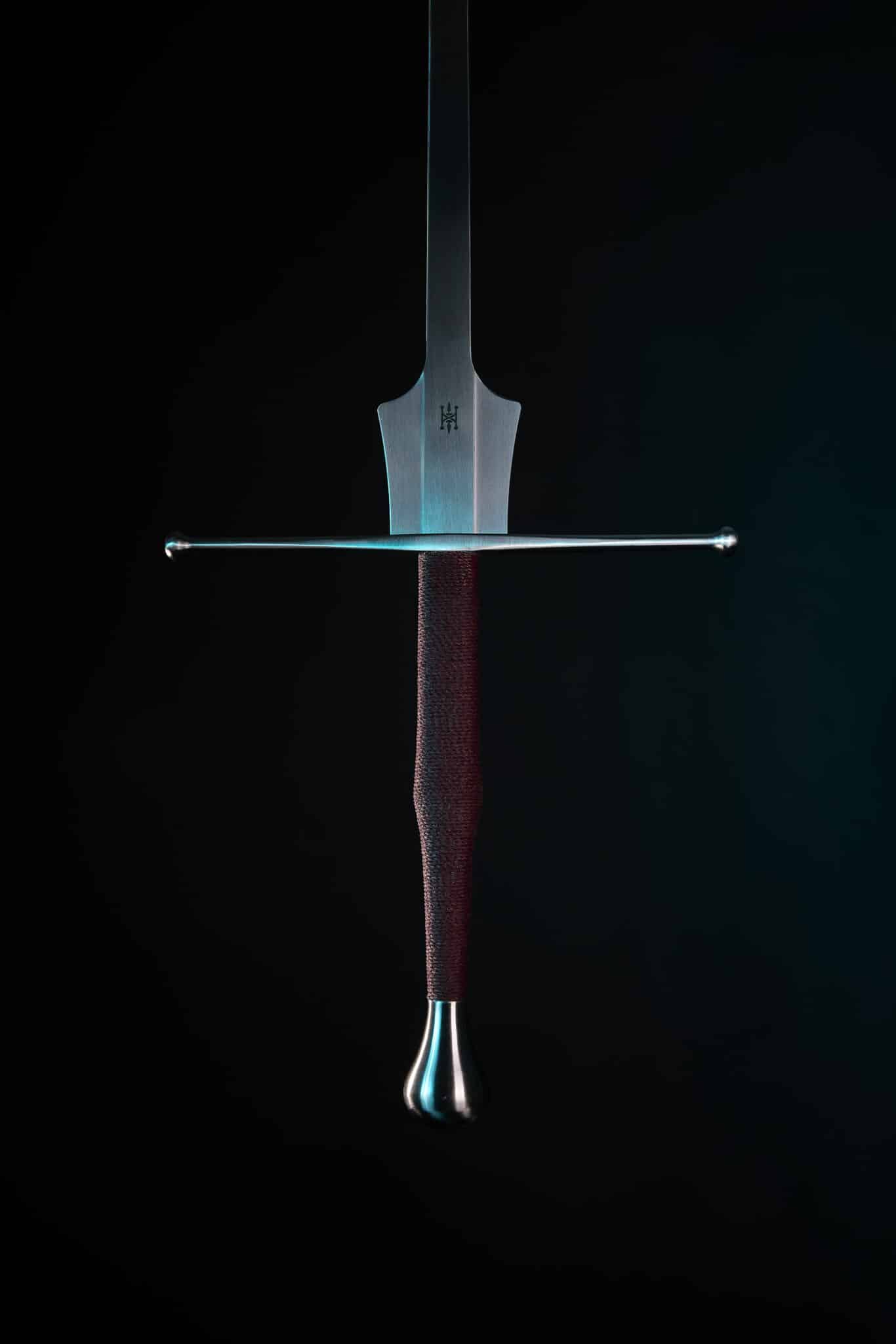
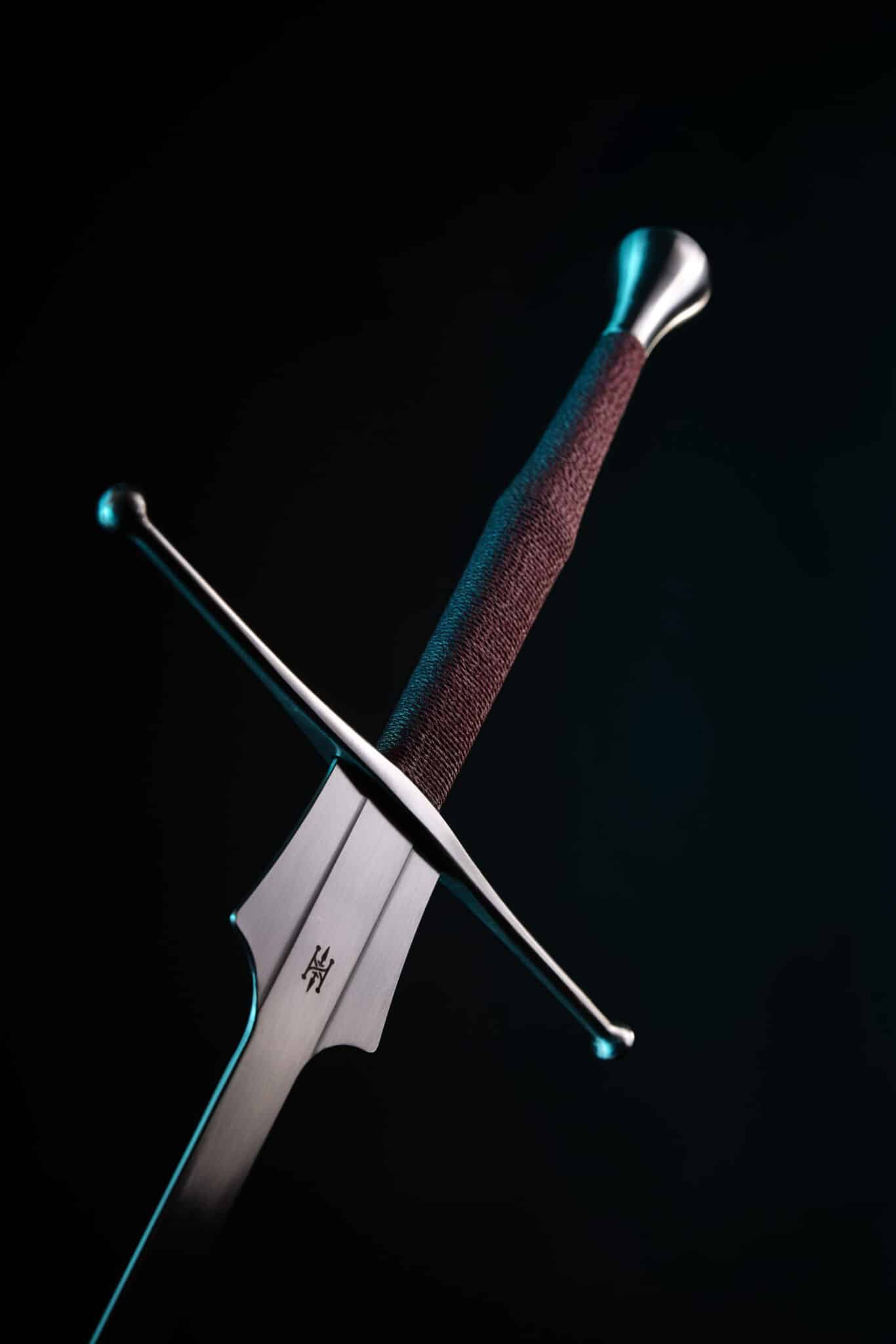


Specifications
- 128.5cmTotal length50.6 in
- 99cmBlade39 in
- 1425gWeight3.14 lb
- 13kgPommel flexat 25 cm
| Total length | 128.5 cm 50.6 in |
|---|---|
| Blade length | 99 cm 39 in |
| Hilt | 29.5 cm 11.6 in |
| Crossguard | 29 cm 11.4 in |
| Point of balance | 6.5 cm 2.6 in from the crossguard |
| Schilt | 6 cm 2.4 in at the base |
| Weight | 1425 g ± 15 g 3.14 lb |
| Tip | Spatulated |
| Pommel flex | 13 kg ± 0.5 kg 28.7 lb at 25 cm (9.8 in) compression |
| Crossguard flex | 15.5 kg 34.2 lb at 20 cm (7.9 in) compression |
Measurements may vary slightly. Flex includes the weight of the sword: how we measure flex.
Overview
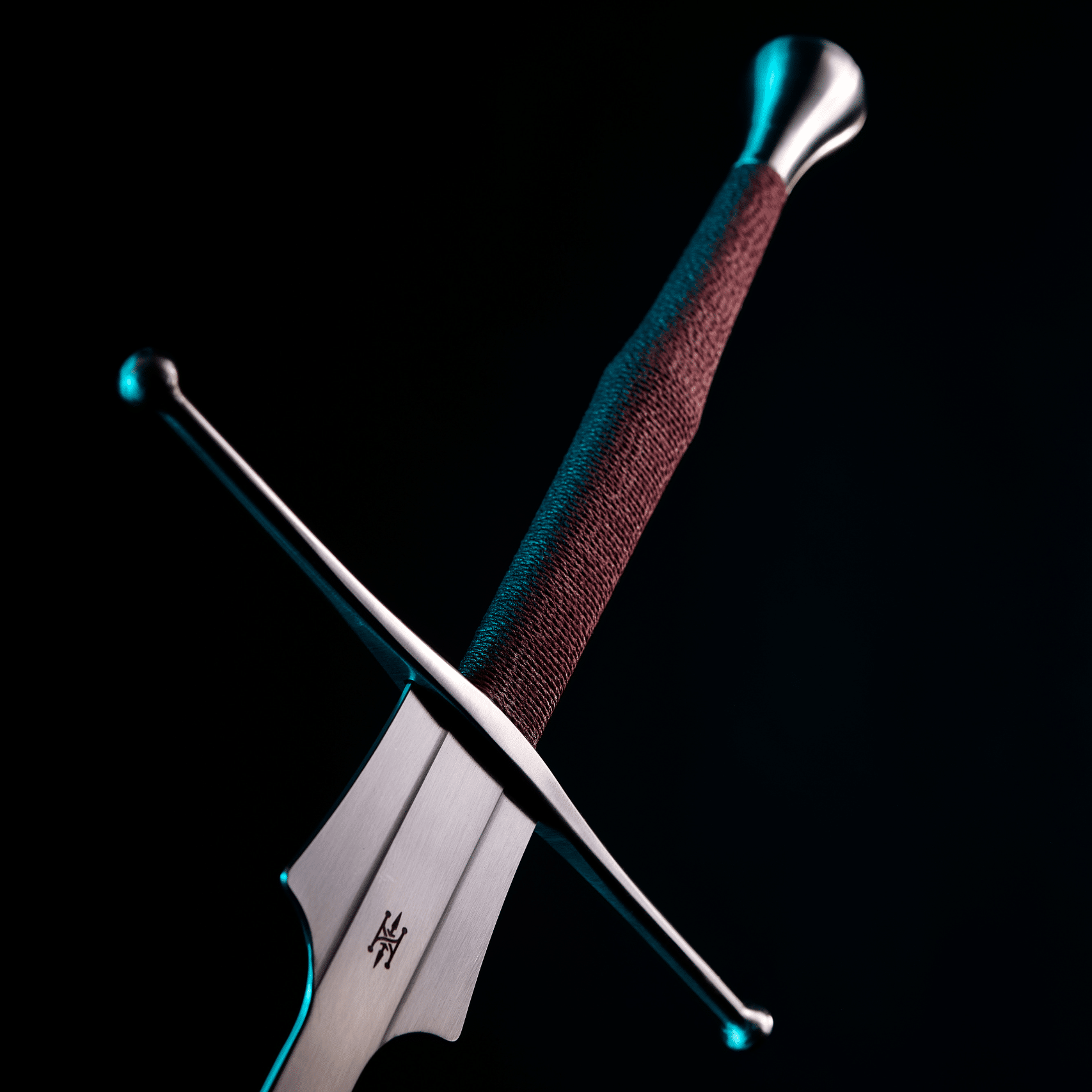
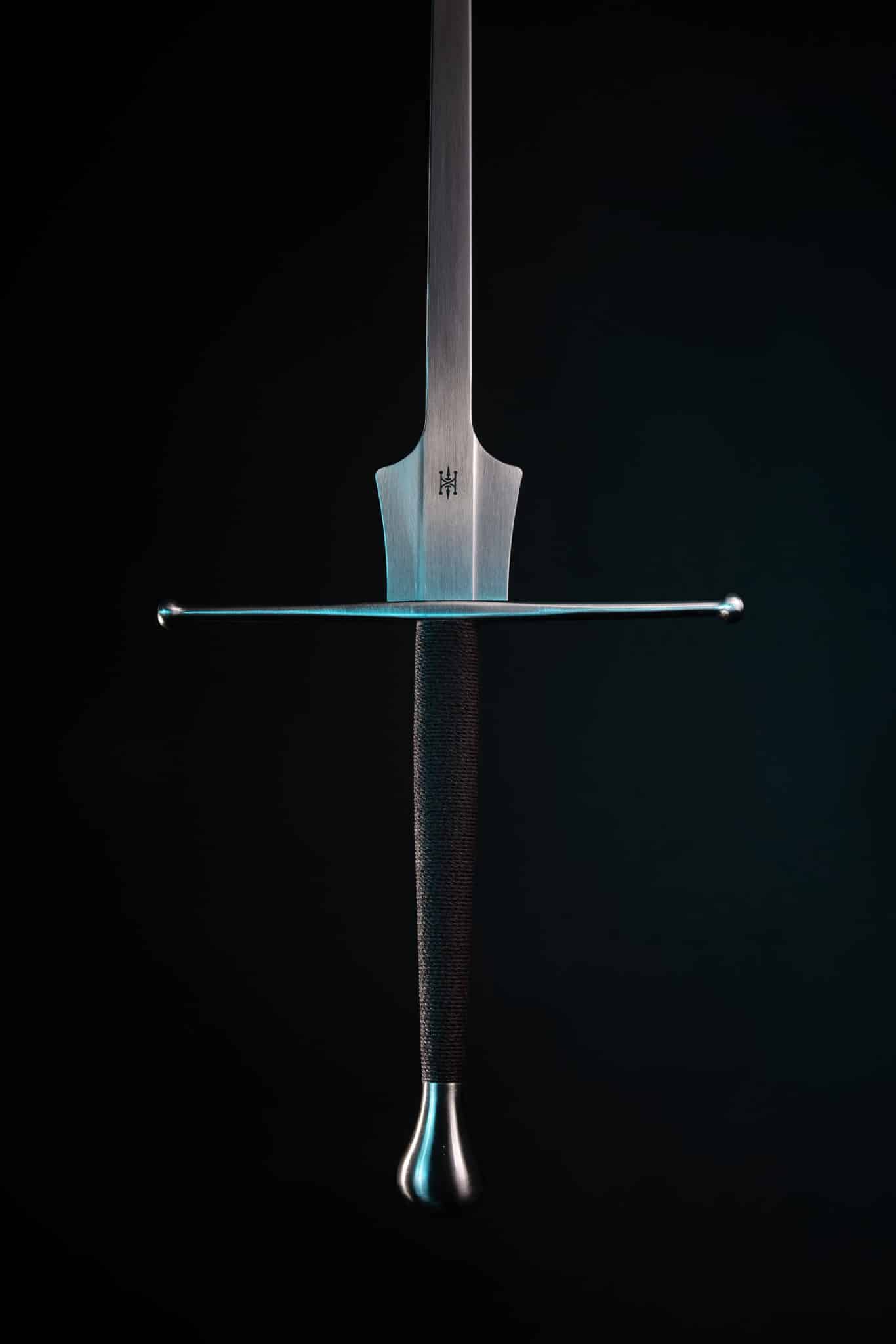
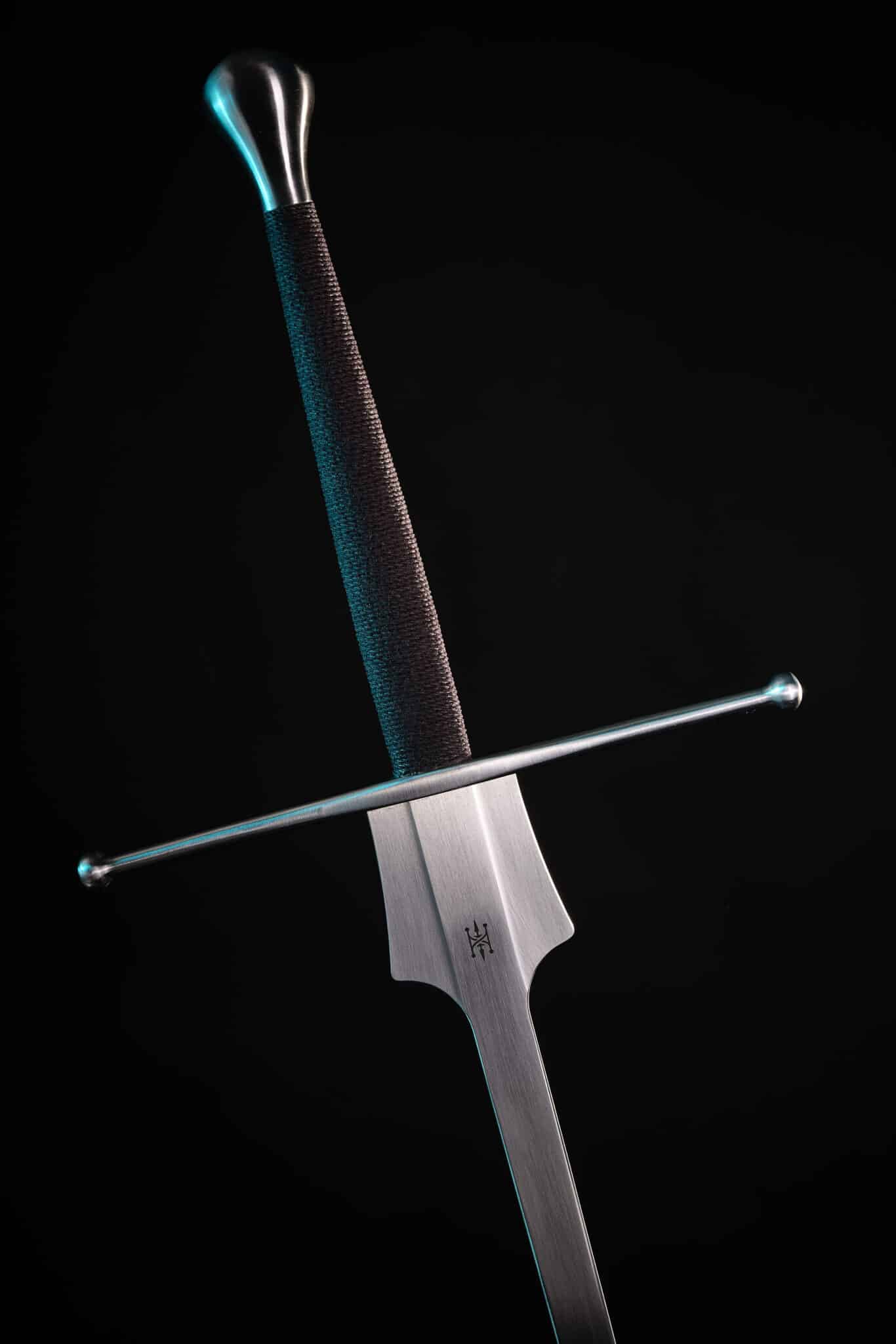
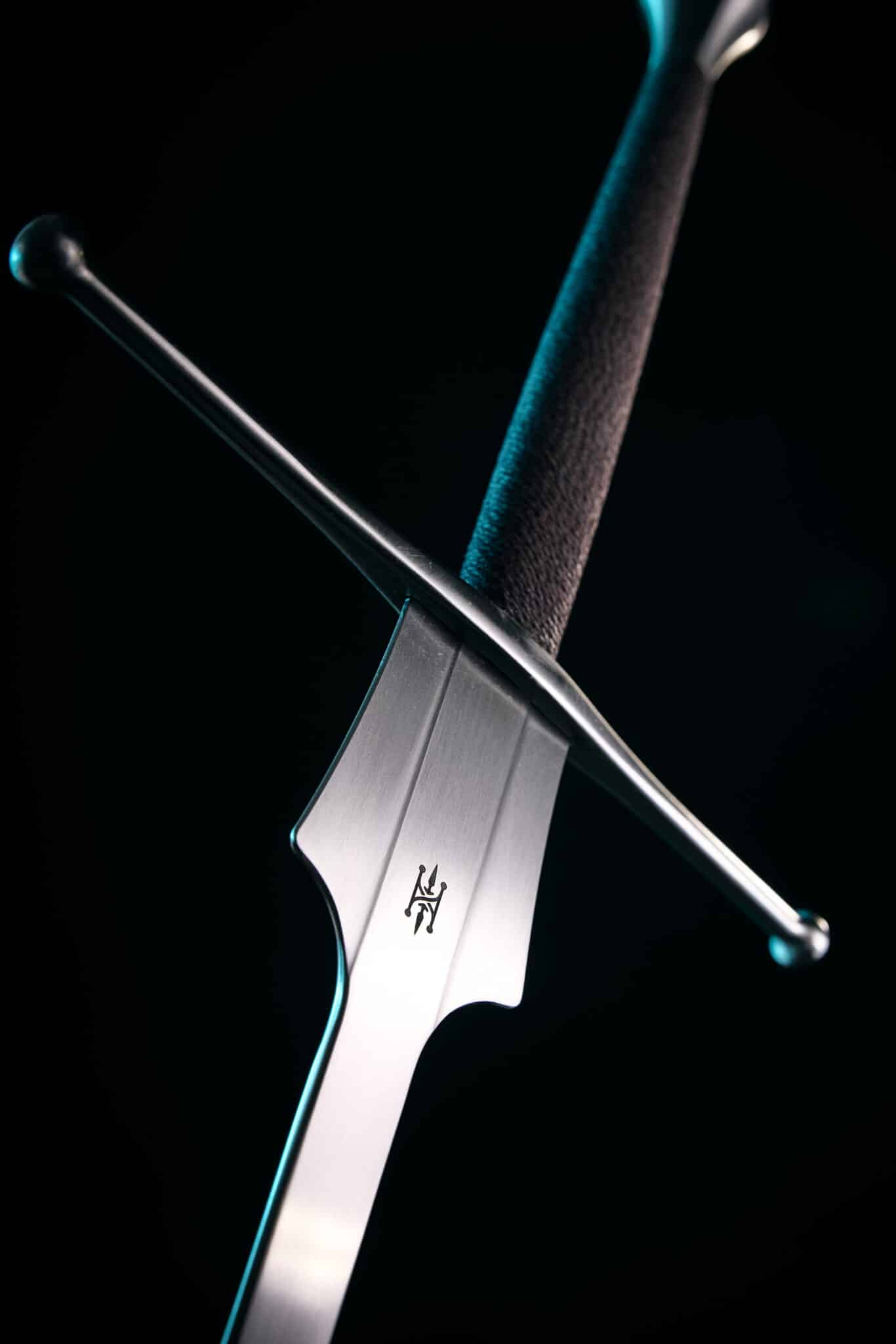
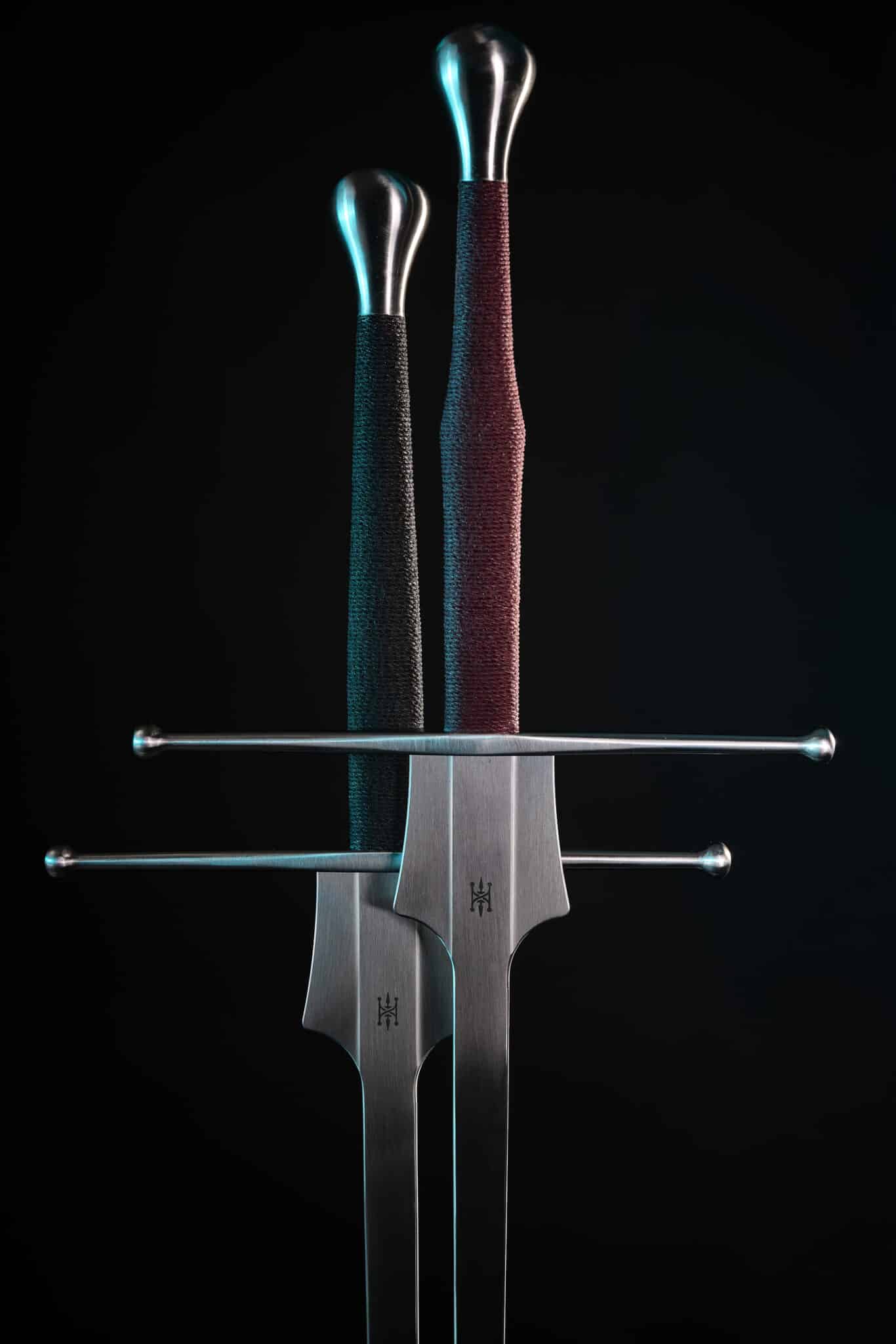
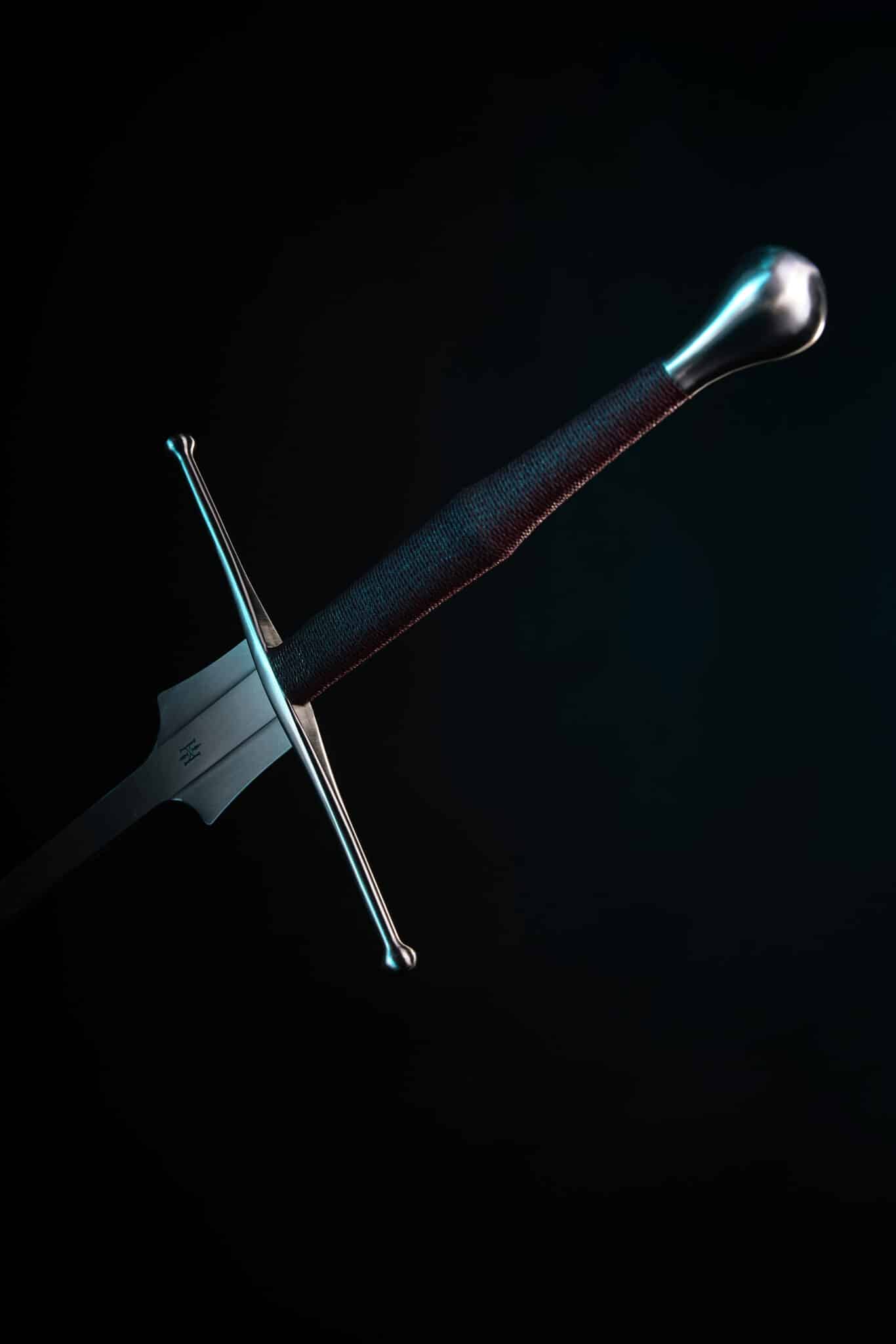
The Haft Feder 128.5 Short was developed in response to demand for a shorter version of our sword. During the design process, we drew inspiration from the variety of blade-to-hilt proportions found in historical swords.
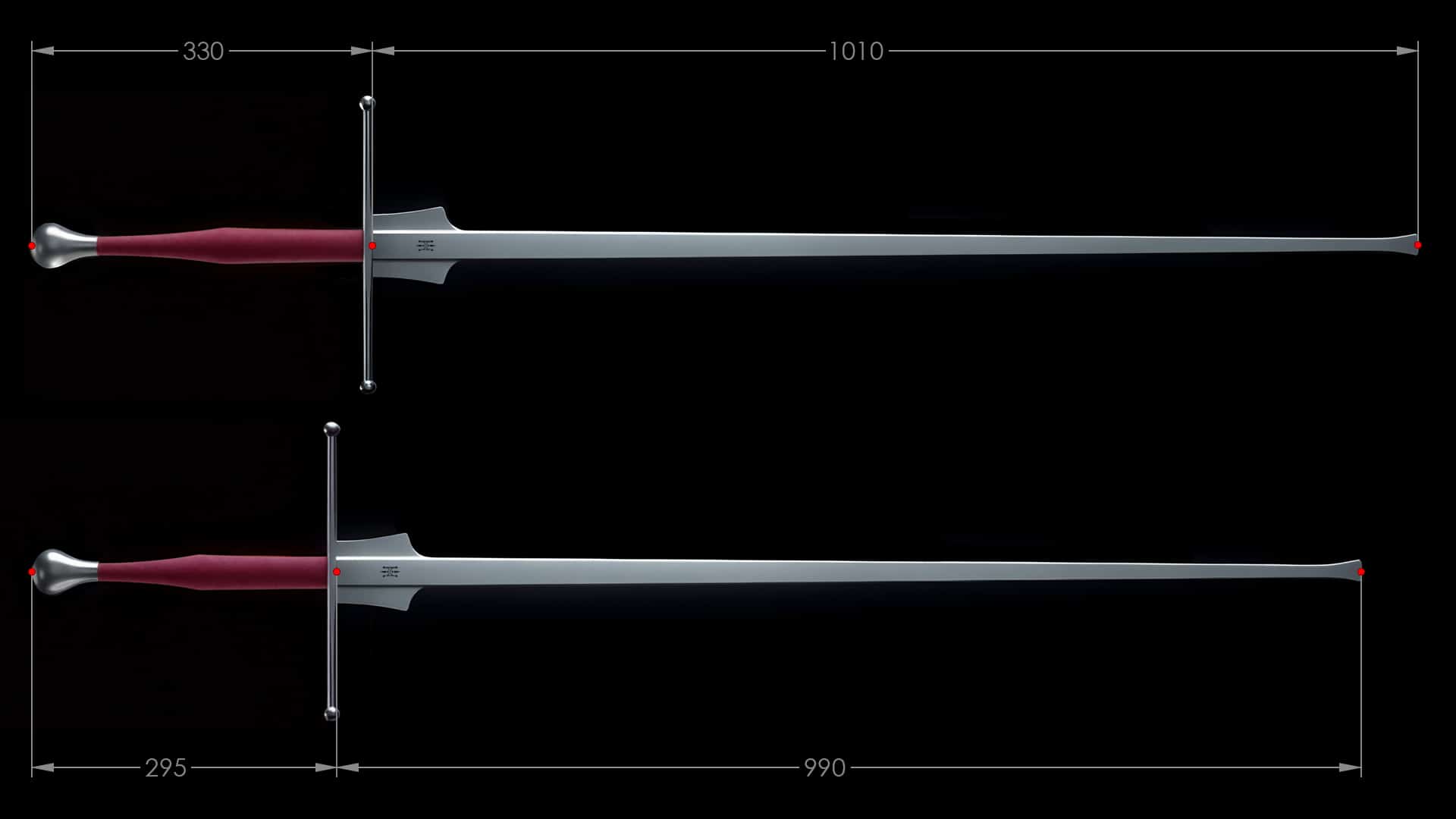
Many modern HEMA longswords are built with a blade-to-hilt ratio close to 1:3. However, historical originals often feature different proportions, such as 1:3.3, 1:3.5, or even 1:4, with longer blades and shorter handles.
For this model, we chose a ratio of approximately 1:3.5, a balanced compromise that provides a handle long enough for comfortable use with modern HEMA gloves while retaining the advantages of a longer blade.
Design
The aesthetic proportions of this sword were optimized using Peter Johnsson’s sword design methodology, resulting in a visually balanced and historically inspired appearance.
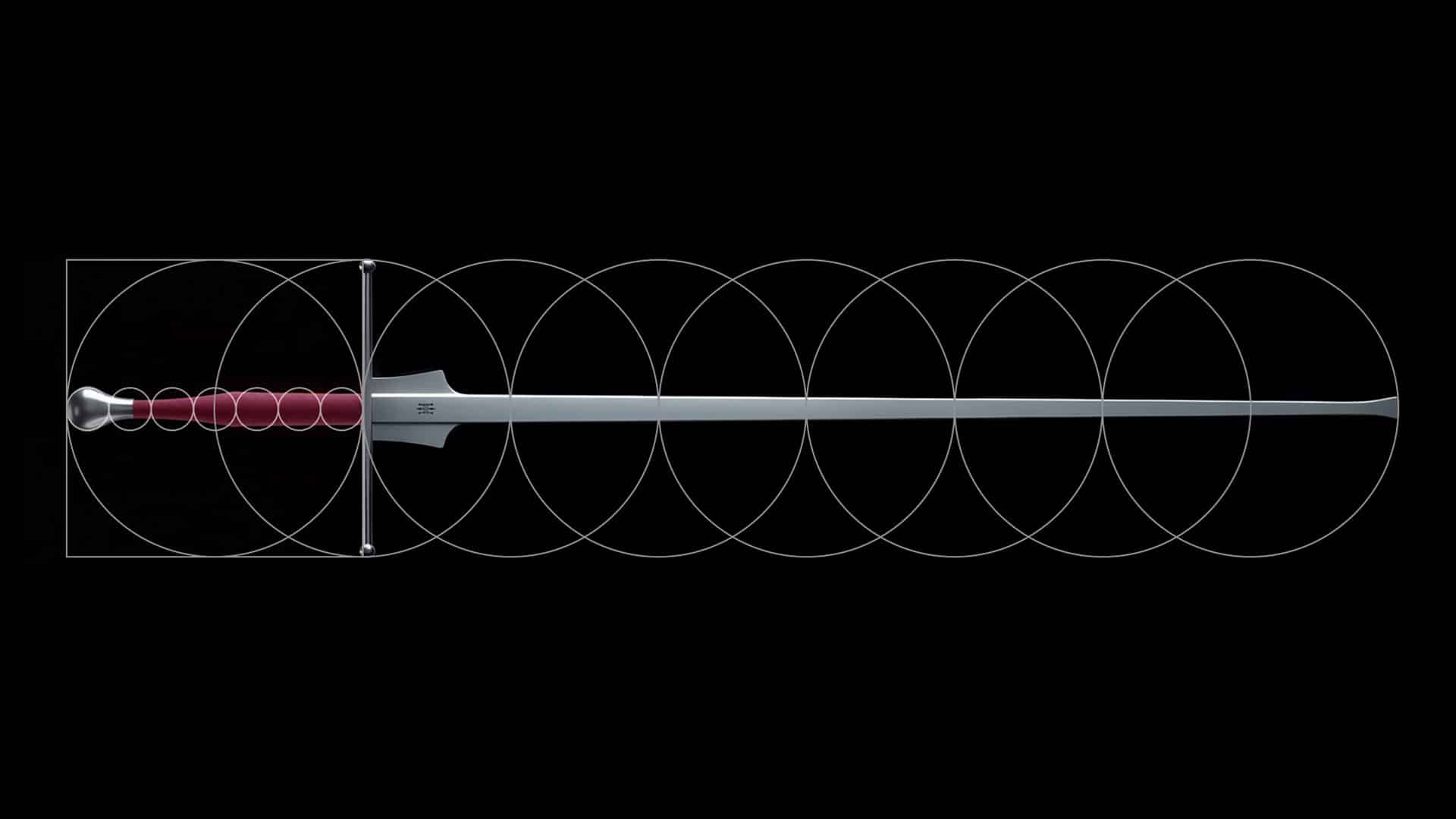
The sword’s dynamic characteristics were carefully refined to achieve excellent handling and responsiveness.
Final dimensions:
- Hilt length, including the pommel, grip, and crossguard: 29.5 cm
- Blade length: 99 cm
The result is a sword that feels lively and responsive in the hands while offering the reach and authority of a longer blade. Its carefully balanced proportions deliver a combination of speed, control, and presence that many fencers appreciate.
Why Choose These Proportions?
The answer lies in physics.
A shorter handle can provide faster point control due to the principles of leverage. When manipulating the sword from the pommel, your hands travel a shorter distance, while the sword’s point moves through a much larger arc. This allows for quicker point movement and highly responsive handling.
Combined with the sword’s low overall weight, the result is a fast and agile feder that offers excellent reach, lively blade presence, and precise control. Despite its dynamic handling characteristics, the sword remains safe for sparring, with a point of balance positioned approximately 6.5 cm from the crossguard.
The Haft Feder 128.5 Short is designed for fencers who value responsiveness, precision, and speed while still benefiting from the reach and authority of a longer blade.
Not sure which length suits you? Read HAFT Feder 128 vs. 134: Which Length Is Right for You?
Options, delivery and warranty
- Grip: standard or waisted, in 17 colours: 12 single colours and 5 two-tone combinations.
- Delivery: we’re busier than usual before Christmas, so dispatch times vary right now. Order now to make sure your sword ships in time for Christmas. We ship worldwide with UPS. See Shipping & Delivery.
- Warranty: we’re responsible for any defect the feder has at delivery that shows within two years. See Returns & Refunds.
- Returns: you can withdraw from your purchase within 14 days of receiving your feder.
- Questions: the FAQ answers the ones we hear most.
Flex at every compression
The force it takes to hold the blade bent, measured from the pommel and from the crossguard. The shaded band is the tolerance of ± 0.5 kg.
The numbers as a table
| Compression | Pommel flex | Crossguard flex |
|---|---|---|
| 0 cm | 10.9 kg | 13.2 kg |
| 5 cm | 11.3 kg | 13.8 kg |
| 10 cm | 11.7 kg | 14.5 kg |
| 15 cm | 12.1 kg | 15.1 kg |
| 20 cm | 12.5 kg | 15.7 kg |
| 25 cm | 12.9 kg | 16.4 kg |
| 30 cm | 13.3 kg | – |
How we measure flex
We give flex at slightly less than the maximum displacement. Swords with shorter blades or different grinding profiles may not reach the maximum, so a smaller displacement is easier to compare across most HEMA swords. It is also the closest to a hand-press measurement.
Our figures include the weight of the sword. When flex is measured on a scale, the reading includes the sword’s weight, and since most people measure it this way, we present our results the same way.
For a flex value without the weight, subtract the sword’s weight from the figure. This is usually unnecessary: allowed sword weights differ by only about 0.2 kg across most rulesets, and at tournament gear checks it is quicker to use values that include the weight.
